
12 June 2024
Favourite National Costume at Binibining Pilipinas 2024
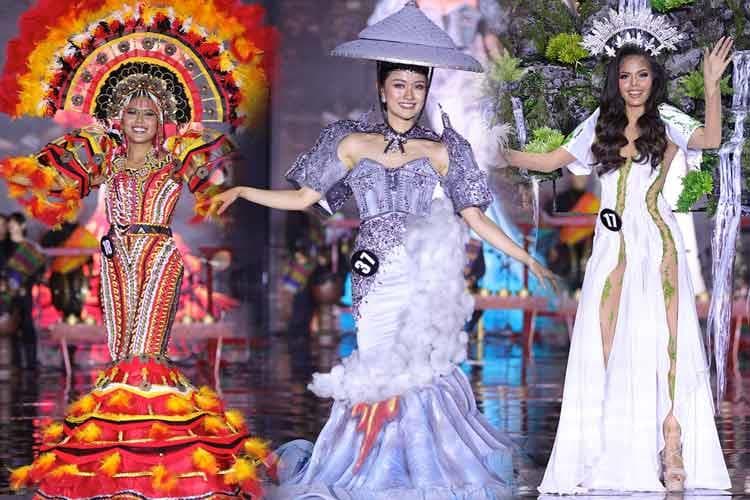
In the grand spectacle of Binibining Pilipinas 2024, where beauty, grace, and culture converge, one national costume stood out as a breathtaking embodiment of Philippine heritage and elegance. Inspired by the rich tapestry of Filipino traditions, Gomez's costume featured meticulously handcrafted elements representing various aspects of Philippine culture. From the elaborate headdress adorned with indigenous motifs to the intricately embroidered bodice symbolizing resilience and strength, every detail narrated a story of tradition and modernity intertwined. Our favourites from Binibining Pilipinas 2024 National Costumes are: Binibini No 38 Geraldine Buenafe, Binibini No 34 Vera Dickinson, Binibini No 30 Trisha Martinez, Binibini No 28 Trisha Martinez, Binibini No 27 Aleckxis Chuidian, Binibini No 26 Phoebe Godinez, Binibini No 22 Tracy Mae Sunio, Binibini No 18 Mythosela Villanueva, Binibini No 17 Rendelle Caraig, Binibini No 13 Roella Frias Solis, Binibini No 9 Gracelle Distura, Binibini No 3 Charisse Anthea Abanico, Binibini No 37 Trisha Hernandez, Binibini No 33 Erika Ballon, Binibini No 23 Joyce Anne Garduque.
02 / 16
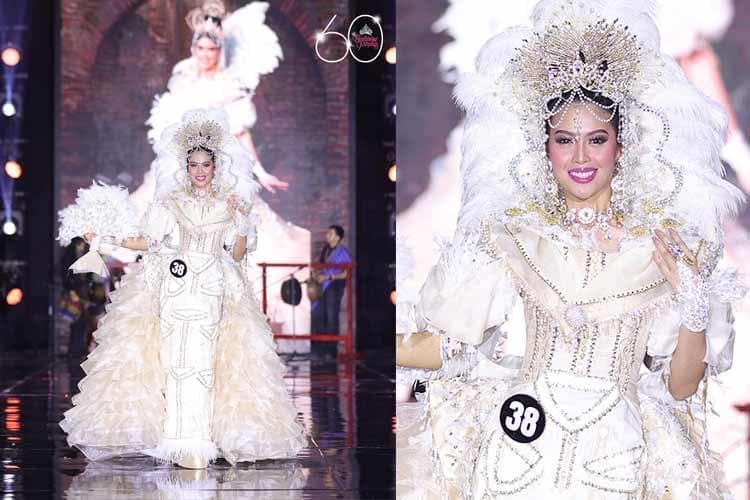
Binibini No 38 Geraldine Buenafe
The enchanting world of Binibini 38's National Costume, a breathtaking homage to Anita Agoncillo Noble, the trailblazing Miss Philippines of 1926 and a proud symbol of Batangas. Inspired by the glamour of the twenties, this ensemble blends tradition with contemporary flair, showcasing the exquisite embroidery of Taal and the natural beauty of Batangas through banana and abaca fabrics. Adorned with intricate wooden accents, it celebrates the region's vibrant culture and lush landscapes. More than just a stunning showcase, this costume is a radiant tribute to Batangas' rich heritage, inviting all to bask in its timeless elegance and spirit.
03 / 16
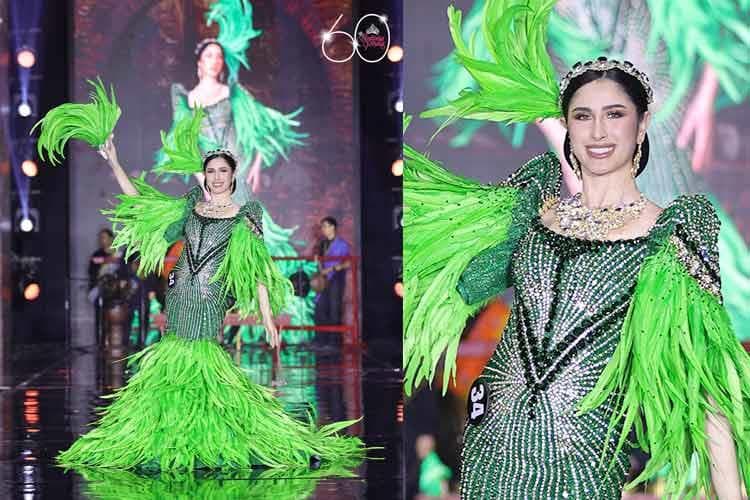
Binibini No 34 Vera Dickinson
Experience the essence of Tarlac Province with Binibini 34 Vera Dickinson's stunning national costume! Celebrating the rich heritage of large-scale rice and sugar plantations, it's a feast for the senses, reflecting the region's vibrant cuisine and its status as Central Luzon's melting pot. Inspired by Malatarlak, the costume embodies the bountiful harvests, especially in rice production, while exuding modesty and the quintessential Filipina charm. Get ready to be captivated by the beauty and grace of this Filipiniana-inspired ensemble!
04 / 16
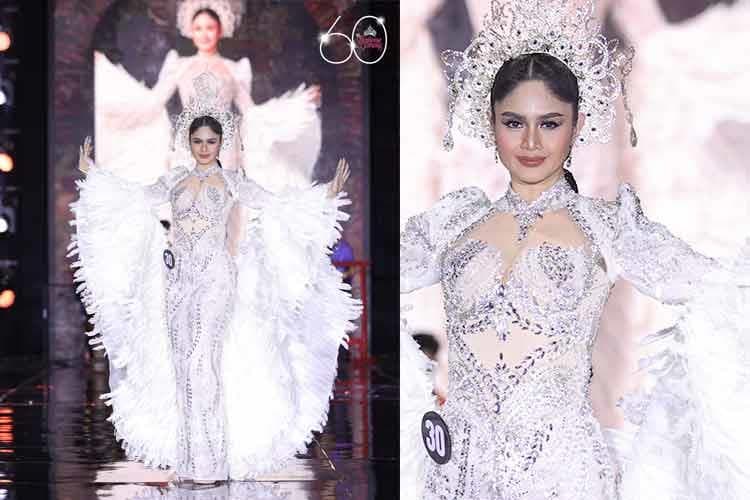
Binibini No 30 Trisha Martinez
Binibini 30 Trisha Martinez from Pila, Laguna presents "La Noble Villa de Pila" in her Binibining Pilipinas 2024 National Costume. This vibrant ensemble pays homage to Pila's rich history and the PAILAH Festival, celebrating the bountiful harvest and divine blessings upon their blessed town. The bodice features intricate patterns inspired by local flora and traditional craftsmanship, embodying the artistic spirit of Pila. Filipiñana sleeves adorned with delicate white feathers honor the courage of Pileños throughout history. The magnificent headdress, crafted from the iconic Palay plant, captures the essence of the town's heritage, symbolizing the enduring spirit of its people amidst the radiant sunrise and sunset of Pila.
05 / 16
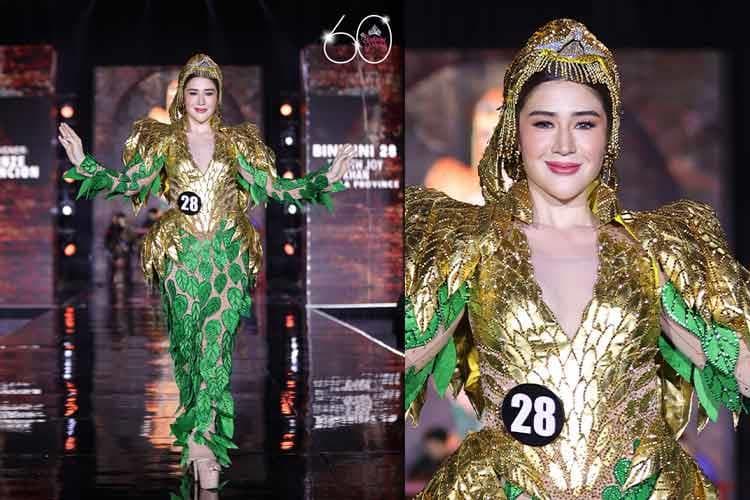
Binibini No 28 Zeneth Khan
Binibini 28 Zeneth Khan - Isabela Province . This national costume pays honor to the “Oris Project” - a non-government organization in Isabela that was created with the goal of saving the Isabela Oriole from the risk of extinction. The Golden Oriole stands for the conservation efforts to save and protect the bird through Buhay Ilang Research, Education and Conservation Inc., and on the other hand - THE GREEN LEAVES stands for the conservation and protection of the Sierra Madre Mountain Range which serves as the natural habitat of the elusive and near to extinction bird.
06 / 16
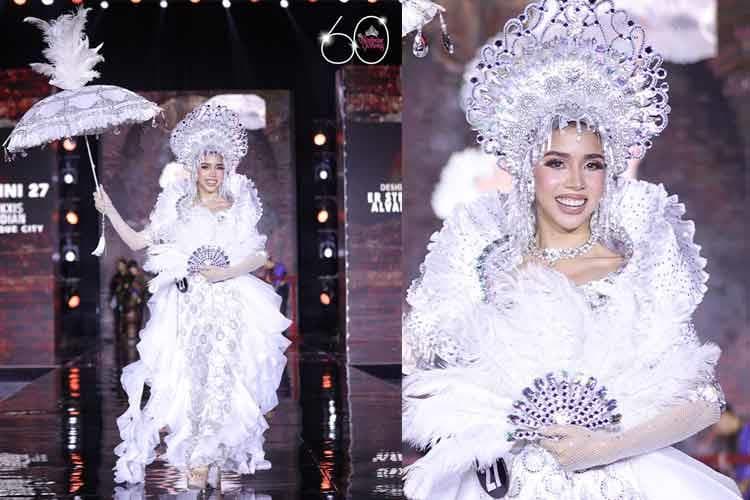
Binibini No 27 Aleckxis Chuidian
Binibini 27 Aleckxis Chuidian - Parañaque City . This white ensemble highlights Parañaque’s annual street pageant called the “Sunduan” which is derived from the word sundo which literally means “to fetch”. It conveys the message that Paraqueños are romantics; that their womenfolk are regarded with love and respect; and that Chivalry is alive in Parañaque. Adorned with Philippine pearls, capiz, gems, rhinestones, barouques and sparkling crystals, this national costume also signifies the sunduan as another metaphor of Christ’s and Mary’s ascension to heaven; in this case the young ladies represent the two divinities while the gentlemen take the place of the heavenly spirits.
07 / 16
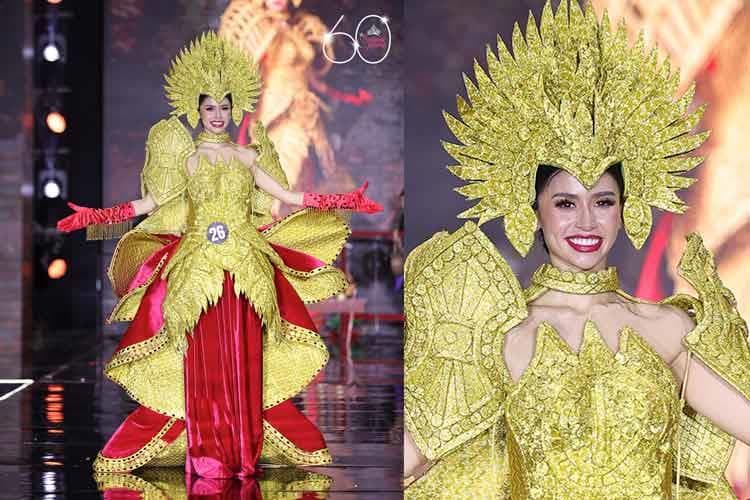
Binibini No 26 Phoebe Godinez
Binibini 26 Phoebe Godinez - Lapu-lapu City, Cebu . “KADAUGAN” translated to VICTORY, is a Filipiniana silhouette with a story of a hero. Inspired by the historic battle of Mactan, home of our country’s first hero, datu Lapu-Lapu, Kadaugan’s KALASAG shield on the sleeves and the KAMPILAN sword headpiece speak of the bravery and unity of the historic chieftain and his warriors while its red and yellow colors with the Magellan’s Cross on the armor represent the arrival of Christianity in the Philippines during the Spanish colonial period which marked a pivotal moment in the history of the Philippines. Finally, The Golden Sun encapsulates the quintessential Filipino spirit of resilience, courage, and unyielding determination to rise above any adversity.
08 / 16
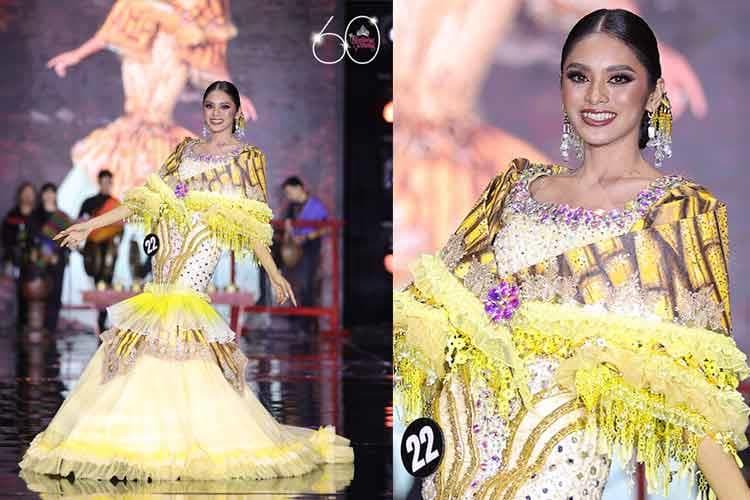
Binibini No 22 Tracy Mae Sunio
Binibini 22 Tracy Mae Sunio – Bacolod . The story of Bacolod can never be told without sugar, and this costume is a nod to the Hacienderos who played a vital role in Bacolod’s rich history that led them towards progress The sugar barons were also the passengers of the Don Juan Tragedy, which happened during the time of the decline of the sugar industry leading to the birth of the Masskara Festival. Featured in this costume are beaded fabric and lace which symbolize the faith and resilience of Bacolodnons, that no matter what trials they face, they can always find a reason to smile.
09 / 16
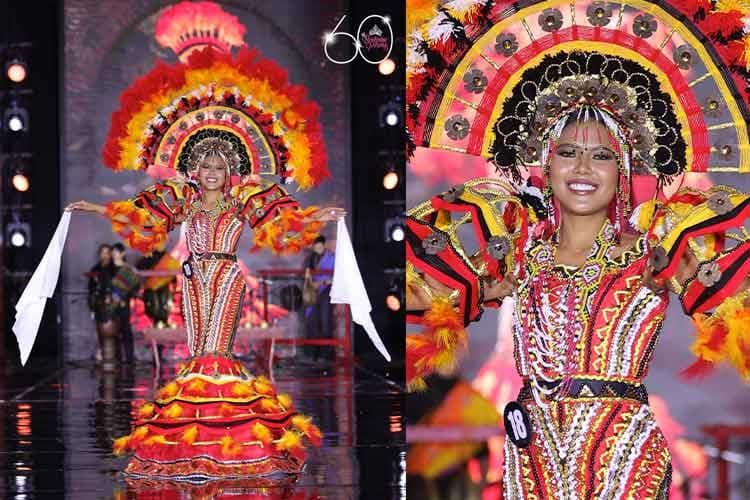
Binibini No 18 Mythosela Villanueva
Binibini 18 Mythosela Villanueva - Misamis Oriental . The Phoenix of Misamis Oriental. This modern higaonon costume consists of a dress made of woven natural fibers such as abaca or cotton, which are dyed in vibrant colors. Adorned with intricate Higaonon patterns and symbols, inspired by the Higaonon’s connection to nature and their spiritual beliefs. The yellow, orange, and red color of the costume is like a PHOENIX which symbolizes STRENGTH, RENEWAL, and REBIRTH. The Higaonon are like a Phoenix when all was left are ashes we clothe ourselves again in flame, a flame of HOPE, a flame of PASSION. In addition, it is Complemented by a headdress made of woven bamboo strips, which is decorated with colorful strands and feathers. Paying tribute to the Higaonon women’s strength, courage, and resilience despite the overwhelming odds and challenges of time, and serves as a reminder that we must give importance to the indigenous people of the Philippines because they are the living treasures of our nation that have shaped our country’s beautiful history.
10 / 16
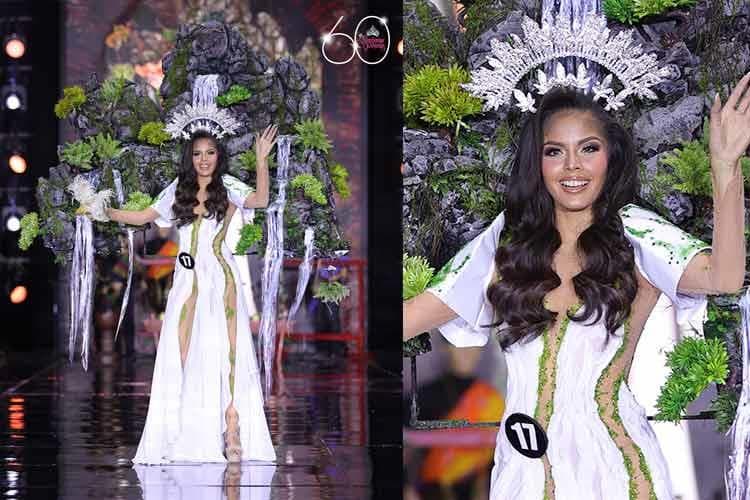
Binibini No 17 Rendelle Caraig
Binibini 17 Rendelle Caraig - Los Baños, Laguna . As the mountain’s deity, Mariang Makiling is the protector of the mystic mountain’s many wonders including its colorful birds, astonishing flowers, and surreal natural wonders including ponds and streams of water. The myriads of natural gifts of the mountain are tended by one of the most loved diwatas in Philippine folklore, known not only for her arresting beauty but also her golden heart. This national costume reimagines Mariang Makiling as the goddess of the mountain who not only governs but also sustains life and providence to all living beings with her endless grace, kindness, and supplication.
11 / 16
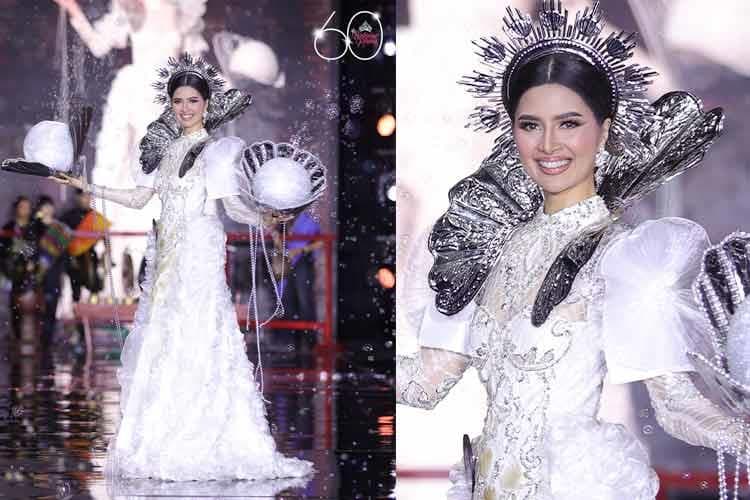
Binibini No 13 Roella Frias Solis
Binibini 13 Roella Frias Solis - Calumpit, Bulacan . Envision a captivating costume inspired by the Capiz products from Bulacan, where the delicate beauty of Capiz takes center stage alongside a modern twist: A portable bubble machine. The gown’s skirt is adorned with intricate panels of Capiz shells, meticulously arranged to create mesmerizing patterns that evoke the elegance of traditional Filipino craftsmanship. Each panel glows softly with pearlescent hues, capturing the enchanting allure of her opulent attire. As she gracefully moves her costume comes to life with the addition of a discreetly hidden portable bubble machine within her ensemble. This innovative accessory releases a stream of iridescent bubbles, cascading gently around her like effervescent jewels, adding a whimsical and enchanting touch to her regal presence. Designed by the esteemed Filipino designer, Francis Dennis Lee, this ensemble blends traditional elegance with modern innovation. She embodies the spirit of Calumpit’s vibrant cultural heritage, captivating hearts with her radiant presence and enchanting display. This costume pays homage to Calumpit Bulacan, celebrating the rich artistic traditions of the Philippines.
12 / 16
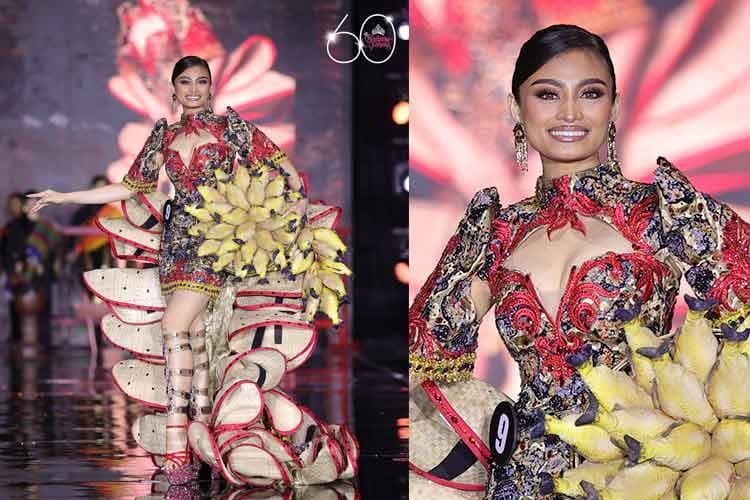
Binibini No 9 Gracelle Distura
Binibini 9 Gracelle Distura - Lucena City – MAGLALAKO . In developing states of Southeast Asia, street vendors play a significant but frequently unappreciated role in both the vibrancy of public spaces as well as the informal economy. Yet, they are subject to indiscriminate purges from sidewalks and other contested territories, which they occupy for lack of provision of spaces in which they could otherwise do business.Thus, the birth of walking vendors and peddlers or the so-called - “MAGLALAKO”. Lucena City is known from small vendors routing villages and towns selling their products. As a proud representative of the City, Gracelle plays the role of a Vendor selling TINAPA which is the primary delicacy of the city.The costume is a combination of modern textiles and colorful indigenous materials procuring the resiliency and modernism of this generation. It symbolizes the growth of heritage, preservation of culture and embodying the tradition that holds the heart of every Lucenahin.
13 / 16
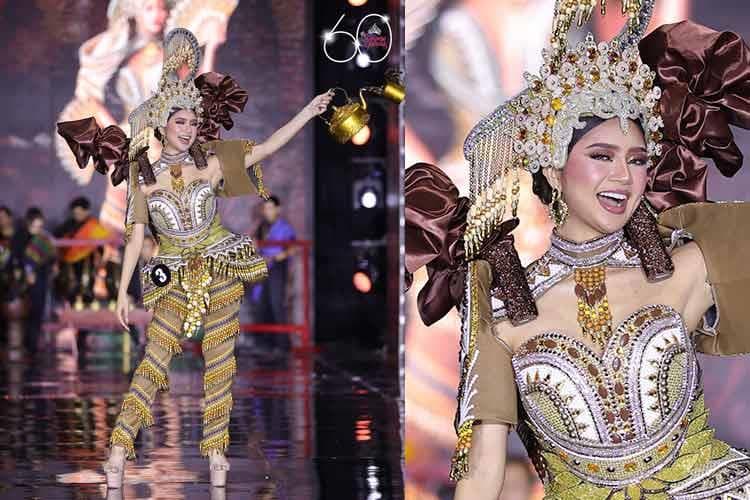
Binibini No 3 Charisse Anthea Abanico
Binibini 3 Charisse Anthea Abanico - Lipa, Batangas . Wearing a costume inspired by Purificacion Villanueva, the first Carnival Queen, and her love story with Teodoro Katigbak, a wealthy Lipeño coffee plantation owner. The gown honors Villanueva’s elegance and the era’s opulence, interwoven with Lipa’s coffee heritage.Luxurious fabrics echo early 20th-century textures, with deep tones reflecting the Katigbak family’s coffee wealth. Beadwork and embroidery on the bodice represent coffee blossoms, a tribute to Lipa’s coffee legacy. The flowing silhouette and ornate details whisper of romance and history. Thea embodies Villanueva’s spirit, while the gown celebrates love, heritage, and Lipa City’s rich culture.
14 / 16
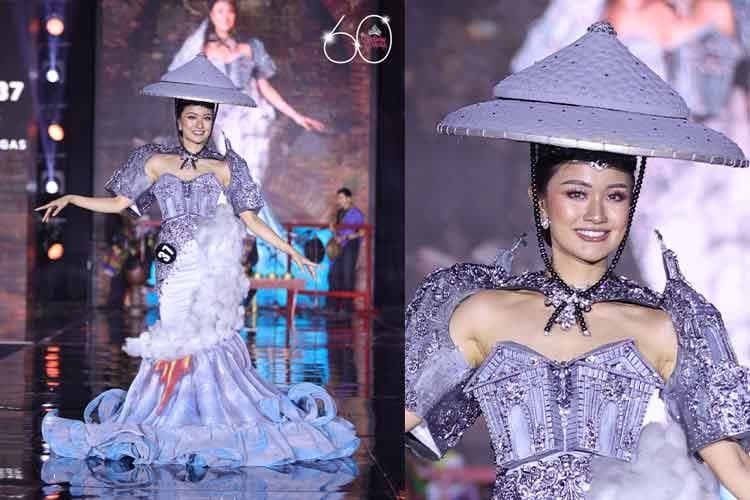
Binibini No 37 Trisha Hernandez
Binibini 37 Trisha Hernandez - Tanauan, Batangas Her national costume signifies the strong faith and resilience of Batangueños. The bottom portion replicates the famous landscape of Taal Volcano, this resembles the beauty behind every disaster, and in challenging moments, this is the perfect time to strengthen our faith in God and ourselves. After all, Batangas is known as “Bayan ng Magigiting” because they choose to rise after every fall. The top portion was inspired by the largest Catholic Church in Asia, Taal Basilica. The combination of the Taal Volcano and the Taal Basilica demonstrates that our courage comes from our refuge, the Church. Lastly, the details on her Salakot signify the colorful attributes of Batangueños. As her beloved hometown, Tanauan City, Batangas is also known as the City of Colors.
15 / 16
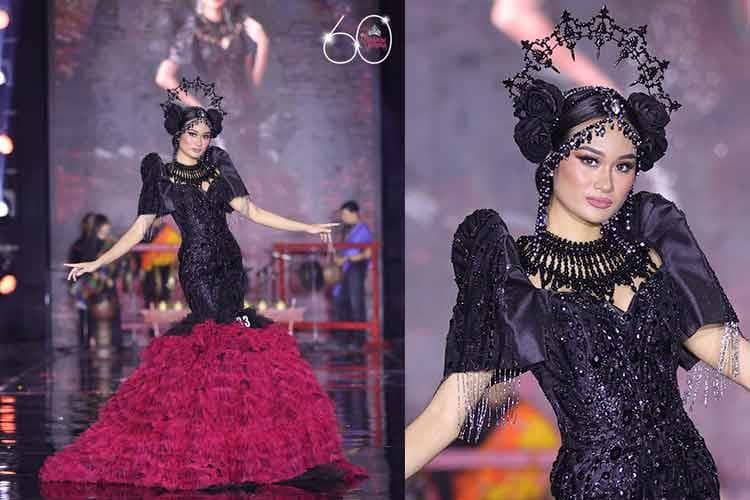
Binibini No 33 Erika Ballon
Binibini 33 Erika Ballon - Pasig City . Inspired by the Red flare water lily, these flowers are known for vibrancy, passion, and resiliency. This national costume is a representation of a full-bloomed red flare waterlily. A vibrant shade of shimmering black sequins mimicking the flower’s stem cascading down into the layers of ruffles that emulate the flower’s petals. Accessorized with a headpiece inspired by the river bedrock, completing a look that not only embodies elegance but also celebrates the beauty of Pasig City.
16 / 16
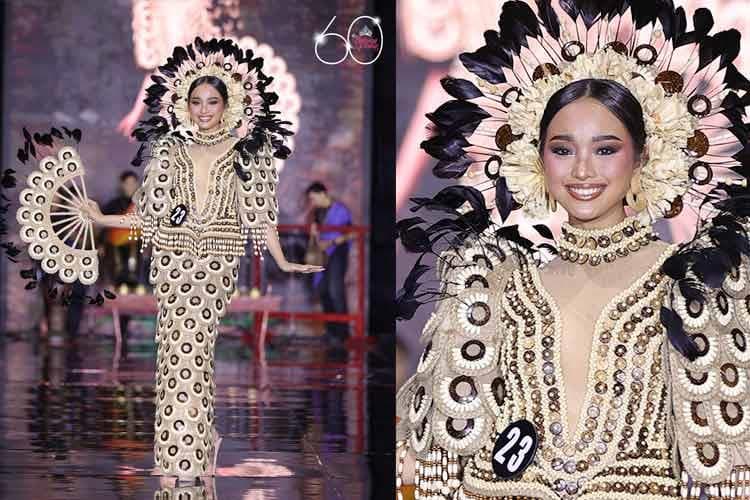
Binibini No 23 Joyce Anne Garduque
Joyce Anne Garduque, Binibini 23, proudly represents Quezon Province with a stunning national costume that celebrates its coconut-rich heritage and vibrant culture. Crafted intricately from various coconut products, this ensemble showcases the province's agricultural abundance. The bodice dazzles with coconut shell beads, echoing the thriving coconut industry of the region. The costume's fabric, woven from coconut husks, speaks to the tradition of durability in Quezon's craftsmanship. Even the stitching threads are derived from coconut fibers, emphasizing the material's versatility. The headdress, crafted from corn husks, pays homage to Quezon's extensive agricultural landscape, particularly its significant corn crops. Inspired by Atimonan's association with mermaids, the skirt's design mesmerizingly resembles scales and a mermaid's tail, capturing the mythical allure of the sea. This ensemble not only showcases Quezon's creativity and resourcefulness but also highlights its commitment to sustainability. Made entirely from dried organic materials, it speaks to the eco-friendly practices deeply rooted in the region. Joyce Anne Garduque's costume beautifully blends tradition with innovation, embodying Quezon Province's natural beauty, cultural richness, and agricultural prowess.
What do you think?
0Points